
VENUES - LOCATIONS
Cathedrals of the Territory Era
The buildings where the photographs were taken — and where professional wrestling was made.
Long before pay-per-view, before national broadcasts, before the talent pool was consolidated under two banners, professional wrestling lived inside buildings like these. Auditoriums and coliseums and cable-television studios scattered across the South — most of them now demolished, repurposed, or quietly preserved under different names. The Ditch-Cat Photo archive was shot inside them. This page is a record of where.
As the catalog grows, this list will grow with it.
The Original Charlotte Coliseum
Charlotte, North Carolina · Opened 1955 · Now Bojangles' Coliseum
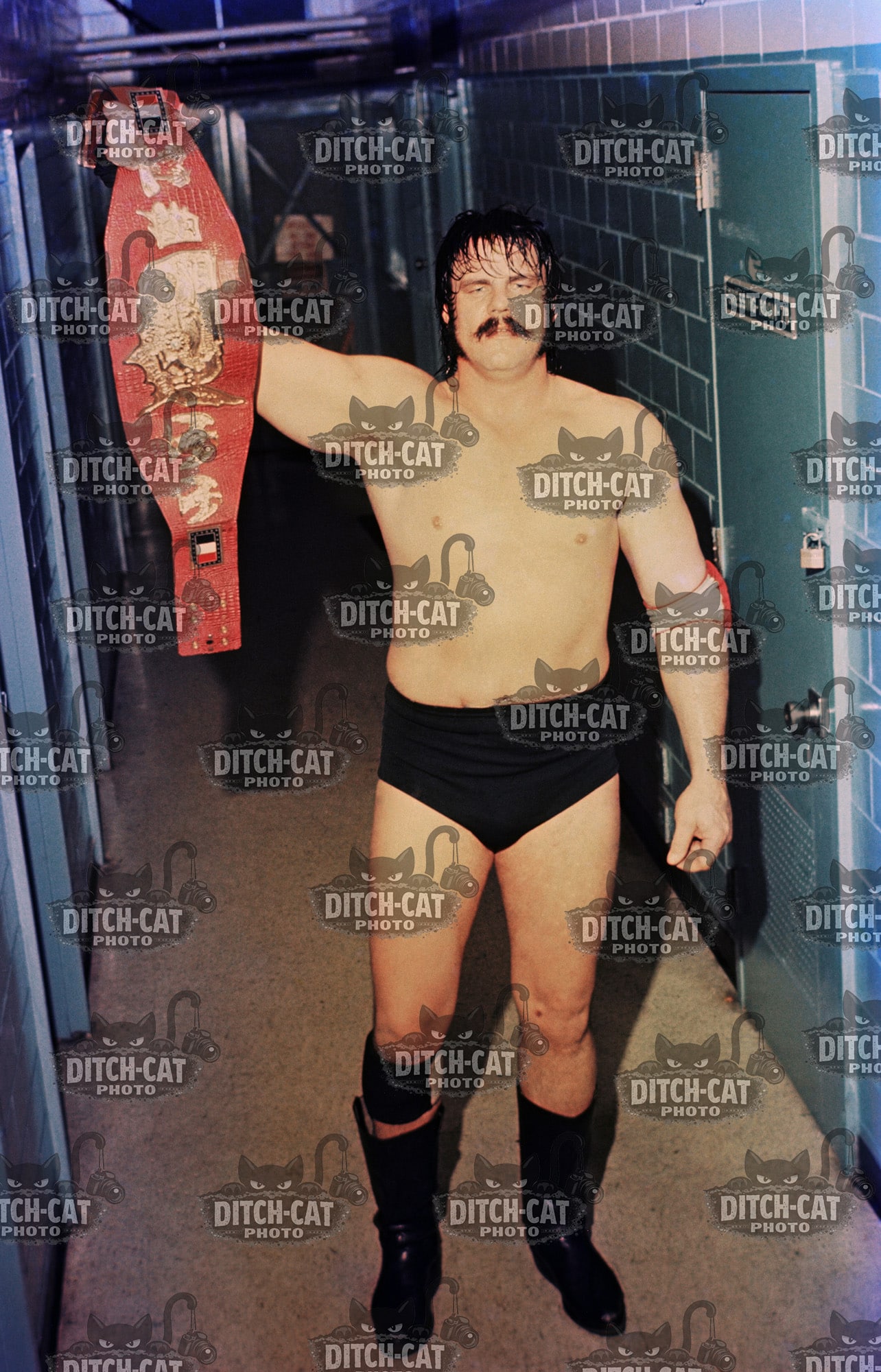
The original Charlotte Coliseum opened its doors on Independence Boulevard in October 1955, a domed steel-and-concrete arena that, at the time of its construction, was the largest unsupported steel dome in the world. For more than three decades it served as the beating heart of Jim Crockett Promotions — the home arena of the Mid-Atlantic territory, host of weekly wrestling cards that drew capacity crowds and main-evented some of the most important matches in NWA history. The roster of legends who walked through its dressing room corridors reads like a roll call of professional wrestling's golden age: Ric Flair, Ricky Steamboat, Harley Race, Wahoo McDaniel, Blackjack Mulligan, the Anderson brothers, Roddy Piper, Magnum T.A., Dusty Rhodes, the Rock and Roll Express, and the Road Warriors.
When the new (and now also demolished) Charlotte Coliseum opened on Tyvola Road in 1988, the original building was renamed Independence Arena, then Cricket Arena, and today stands — restored and preserved — as Bojangles' Coliseum. The walls remember.
Featured prints from this venue:
Greenville Memorial Auditorium
Greenville, South Carolina · Opened 1958 · Demolished 1997
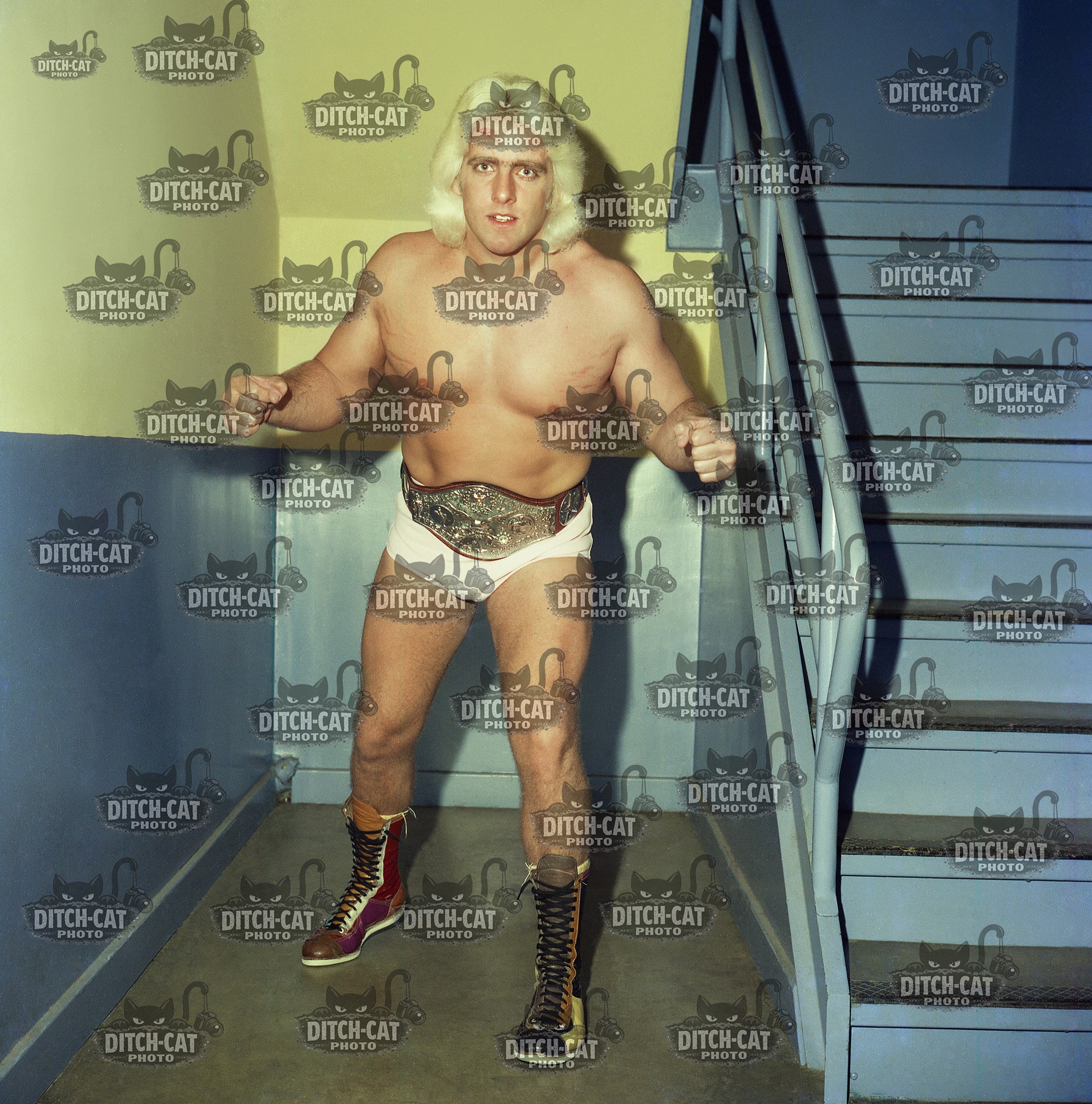
A 5,500-seat auditorium that opened in the late 1950s at 401 East North Street, the Greenville Memorial Auditorium was for nearly four decades the cultural and sporting heart of the Upstate. Elvis Presley played here. James Brown played here. Johnny Cash played here. Furman University's men's basketball team played here, painting the building's interior stairwells in the school's signature purple. And every few weeks, Jim Crockett Promotions rolled into town and the building turned into a Mid-Atlantic wrestling cathedral — the Memorial Auditorium becoming a regular stop on the JCP circuit between Charlotte, Greensboro, Raleigh, Columbia, and Spartanburg.
For Upstate South Carolina wrestling fans, the building was the room. It was where you saw Flair work. Where you saw Steamboat fly. Where you saw Wahoo McDaniel chop a man into next week. The Greenville Memorial Auditorium was demolished in 1997 to make way for what would become the Bon Secours Wellness Arena (originally the BI-LO Center). The building is gone. The memories — preserved here, in part, by the Ditch-Cat archive — are not.
Featured prints from this venue:
The TBS Studios — Studio One
Atlanta, Georgia · 1050 Techwood Drive · Home of Georgia Championship Wrestling
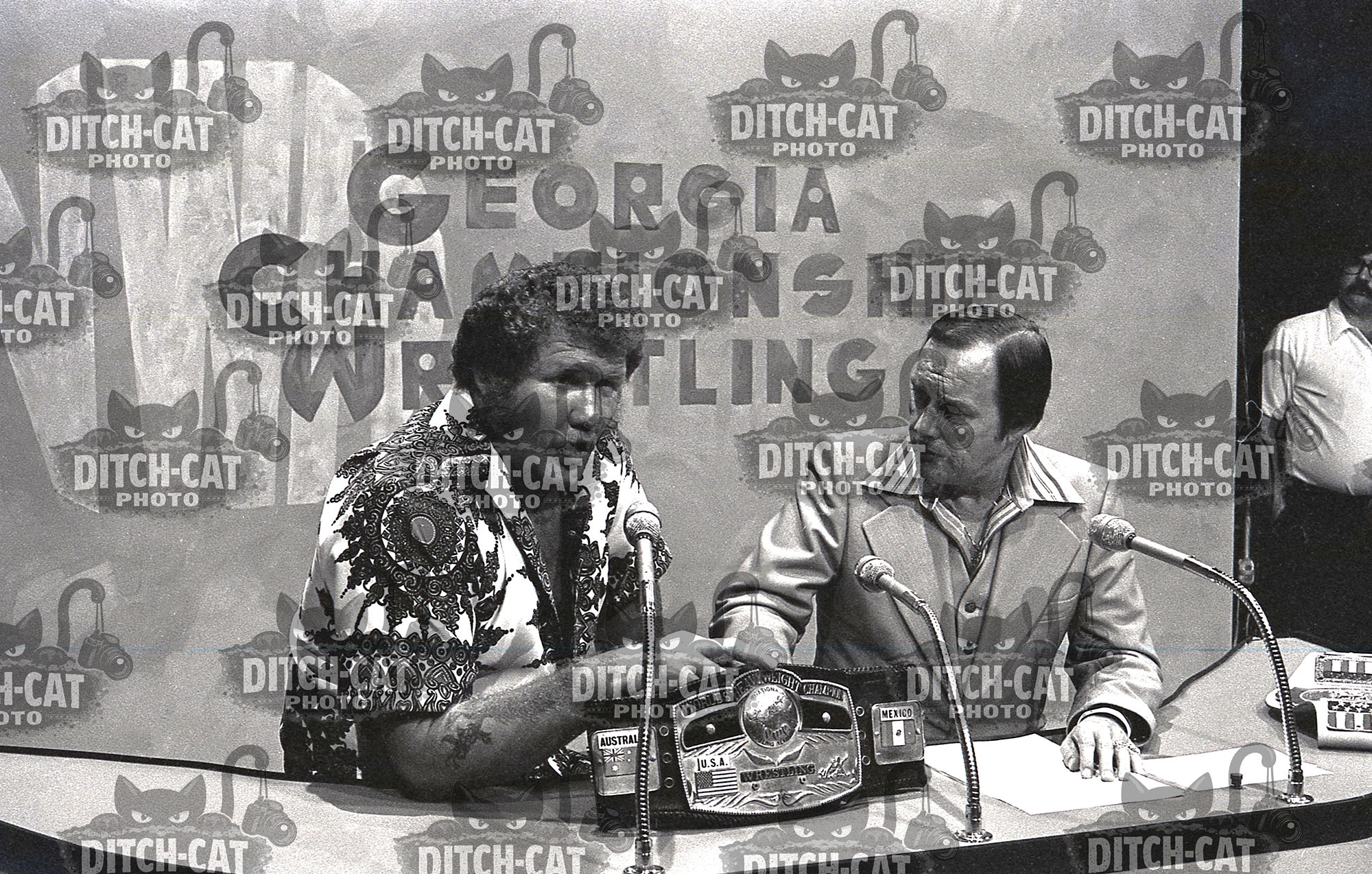
Tucked into the basement of Ted Turner's Techwood Drive headquarters, Studio One was — and remains — one of the most historically important buildings in the history of professional wrestling. From 1972 onward, Studio One hosted the weekly tapings of Georgia Championship Wrestling, the program that would, on December 17, 1976, become one of the first wrestling broadcasts in the country uplinked to a satellite when Turner's WTCG-Channel 17 became the WTBS "Superstation." From that moment, the small studio with the painted scenic backdrop and a few hundred folding chairs was beaming professional wrestling into living rooms from coast to coast — a national cable audience years ahead of any rival promotion.
It was here that Gordon Solie conducted the interviews that defined the broadcast vernacular of wrestling television. Here that Tommy "Wildfire" Rich, Ole Anderson, Buzz Sawyer, Magnum T.A., Dusty Rhodes, and a generation of stars were made. And here, on July 14, 1984 — the day still remembered as "Black Saturday" — Vince McMahon Jr. acquired the time slot and replaced Georgia Championship Wrestling with WWF programming, in a moment many wrestling historians mark as the beginning of the end of the territory system.
Featured prints from this venue: